FAQ - Electronic invoicing
Frequently asked questions about E-Invoicing
What is electronic invoicing?
Electronic invoicing, or e-invoicing, is the exchange of invoice data in a structured digital format that business systems can read and process automatically. A true e-invoice is more than a PDF sent by email: it contains standardized invoice data that can move from a supplier’s billing system to a buyer’s finance or ERP system, often through an approved network, access point, or government platform.
In this article:
- toc
What is the purpose of e-invoicing?
The purpose of e-invoicing is to make invoicing faster, more accurate, more transparent, and easier to control. For businesses, it reduces manual handling and helps improve invoice processing. For tax authorities, it provides better visibility into transaction data and supports VAT compliance. For trading partners, it creates a more reliable way to exchange invoice information.

What are the benefits of e-invoicing?
E-invoicing has many benefits, including less manual work, lower risk of errors, faster invoice approval, more payment visibility, and support for compliance with country-specific mandates. For international companies, e-invoicing simplifies the management of different customer, supplier, and regulatory requirements across markets.
What is e-reporting?
Electronic reporting, or e-reporting, is the digital submission of transaction, tax, or payment data to a tax authority. It works hand-in-hand with e-invoicing, but it serves a different purpose: e-invoicing manages the exchange of invoice data between trading partners, while e-reporting focuses on sending required fiscal data to the relevant authorities.
You can learn more about e-reporting in this guide
What is ViDA?
ViDA stands for VAT in the Digital Age. It is the European Union’s VAT modernization package, adopted on March 11, 2025, and being introduced in phases through January 2035. One of its major changes is the move toward digital reporting requirements for international B2B transactions, based on structured e-invoicing. In practice, ViDA is helping set the direction to a more standardized, digital VAT compliance across the European Union (EU).
What is the 4-corner model?
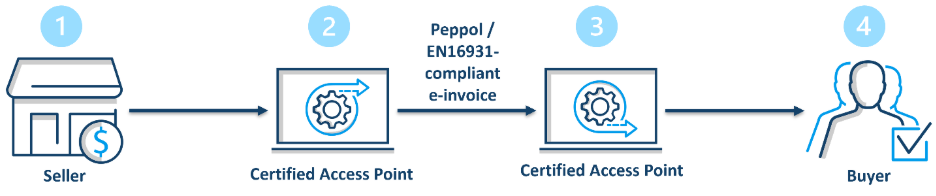
The 4-corner model is the framework used for exchanging e-invoices through service providers. The four corners represent:

The supplier

The supplier’s service provider

The buyer’s service provider
The buyer
Each party connects through its provider, which helps route the invoice securely and in the correct format. E-invoice exchange via Peppol is a well-known example of a 4-corner model.
What is the 5-corner model?
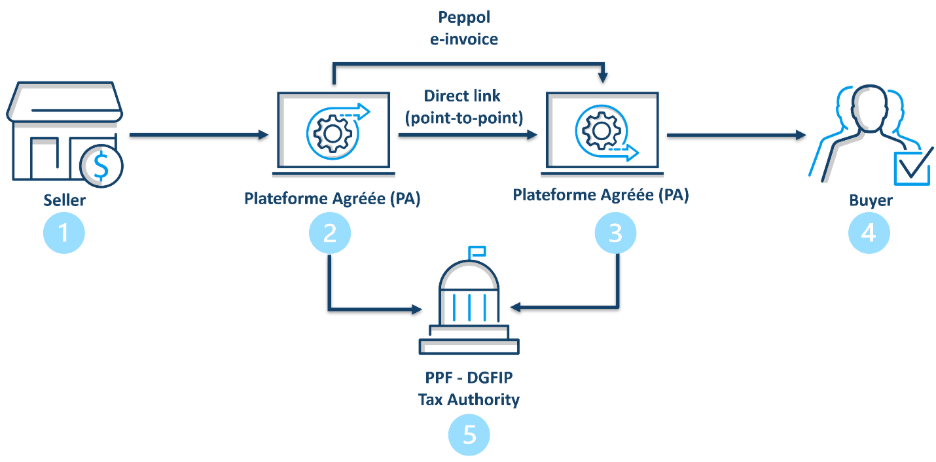
The 5-corner model adds a new participant to the 4-corner model, usually a tax authority or government-controlled platform. This model allows invoice or reporting data to be shared with the authority as part of the transaction flow. It is becoming more relevant as governments combine e-invoicing with near-real-time reporting. Below is the example of the 5-corner model for e-invoicing in France.
Is e-invoicing becoming mandatory?
Yes, in many countries e-invoicing is becoming mandatory. Requirements vary by jurisdiction: some countries require structured e-invoices through Peppol or another approved network, while others use clearance platforms, national formats, or e-reporting obligations. The direction is clear: businesses should expect more digital, structured, and regulated invoice exchange over time.
What are the e-invoicing deadlines?
Deadlines vary by country, transaction type, company size, and local rules. For country-specific details and upcoming deadlines, use this interactive map. At EU level, ViDA introduces digital reporting requirements for international B2B transactions from July 1, 2030, with further alignment expected by January 1, 2035.
How will I be affected by e-invoicing?
Your company may need to change how invoices are created, validated, sent, received, archived, and reported. Finance, tax, IT, procurement, and customer service teams may all be affected because e-invoicing often touches ERP data, supplier onboarding, customer billing flows, VAT reporting, and exception management. The impact will be bigger if you operate in several countries or trade with customers and suppliers subject to different mandates.
How can I prepare my company for e-invoicing?
1. Identify which legal entities, countries, customers, suppliers, and invoice flows are in scope.
2. Assess if your ERP, accounting, and finance systems can generate and receive structured invoice data in the required format.
3.Review data quality, archiving requirements, internal ownership, testing needs, and provider options.
For more information, check out this useful step-by-step guide.
How can I get help with my e-invoicing project?
You can work with a provider that understands both the technical integration and the changing compliance landscape. Descartes supports e-invoicing and e-reporting projects with connectivity, Peppol access, format handling, ERP integration, and multi-country compliance support.
Would you like to learn more about Descartes E-Invoicing solutions ?
E-Invoicing Resources


Global E-invoicing