
Fleet Performance Management
Daily Route Planning Software
Optimize daily operations and build efficient routes to control costs while maintaining service levels.







Reduce Operational Planning Time
Give planners tools to simplify complex schedules.
- View routes and stops on an interactive map.
- Schedule route planning in advance.
- Adjust quickly as new orders are added.

Optimize Based on Multiple Goals
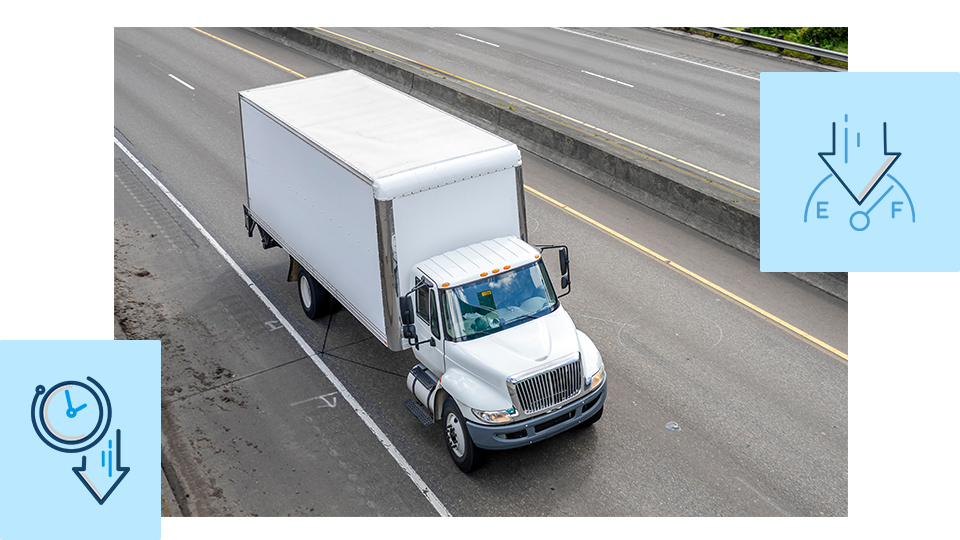
Build profitable, efficient delivery routes that meet customer expectations.
- Optimize based on distance, time, cost and number of routes.
- Account for capacity, driver hours, and customer time windows.
- Build realistic routes based on historical traffic data.
Connect Planning and Dispatch
Keep operations aligned from plan to execution.
- Identify routes at risk based on capacity or expected arrival times.
- Make informed adjustments with order and customer level visibility.
- Monitor planned versus actual delivery performance in real time.

Continuous Optimization
The route optimization engine works continuously in the background, handling constraints and goals simultaneously to balance cost, workload and customer service.

More Route Planning Solutions

Strategic Planning
Make long-term decisions on routes and fleets.
Hybrid Planning
Combine fixed and dynamic routing.
Distributors and Retailers Deliver with Descartes

“We're able to use optimization to make sure that we're reducing hours on the road and getting to the delivery sites that we have made promises to.”
KRIS HIGNIGHT
Manager, Enterprise Logistics Software, SRS Distribution
"We eliminated reliance on tribal routing knowledge, created massive efficiencies, and fully optimized vehicle capacity and order visibility. We can deliver more tires, faster, and on time."
SCOTT DUSHANE
Director of IT, Fairmount Tire

Ready to improve delivery performance?
Connect with our team to get started and see how Descartes can help you streamline routes, reduce costs, and consistently deliver on time and in full.
Featured Resources


Daily Route Planning FAQ's
Wholesale distributors, retailers, and private fleet operators across the U.S., Canada, and global markets use Descartes’ daily route planning software to optimize delivery operations and improve last mile performance.
The platform is purpose built for organizations managing dedicated private fleets with complex routing requirements, customer time windows, vehicle capacity constraints, and high order volumes.
Food and beverage distributors, building supply companies, and medical supply distributors rely on daily delivery planning software to reduce miles, lower transportation costs, increase route efficiency, and improve on-time customer service.
Daily route planning software should integrate with enterprise resource planning (ERP), warehouse management systems (WMS), transportation management systems (TMS), and order management systems to automatically import orders and export routes, driver manifests, and performance data. Seamless integration reduces manual work and ensures routing decisions reflect real time order and inventory information.
By optimizing miles, reducing the number of routes, improving vehicle utilization, and protecting delivery windows, daily route planning software helps distributors lower fuel costs, control labor hours, and improve on-time performance.
Daily route planning refers to building the day’s routes before trucks leave the depot. Operational planning often refers to reactive planning and re-optimization that takes place once routes are in motion.
In practice, the terms are used interchangeably. With route planning software from Descartes, your team can build the base plan for the day, dynamically re-optimize as orders come in, and adjust plans when exceptions crop up.
Daily and operational routing software come in many different flavors. Smaller fleets of less than ten vehicles may be able to get by with a basic set of features:
- Order import: Importing daily orders from an ERP or spreadsheet, for example.
- Geocoding and mapping: Converting customer addresses into coordinates.
- Batch planning: Periodically optimizing existing orders.
- One-factor optimization: Ability to optimize based on cost or mileage, for example.
- Basic vehicle capacity management: Ability to stay within basic cube or weight constraints.
- Driver vehicle assignment: Assigning drivers and vehicles to routes.
- Sequencing: Optimizing the order of stops, often within a pre-defined route.
- Manual adjustments and drag and drop: Ability to add, remove and re-sequence orders.
- Driver manifest and navigation: Ability to generate a stop list or publish stops to a mobile app.
Distributors with more complex, multi-stop routes should consider investing in more advanced route planning features:
- Multi-constraint optimization: Ability to optimize and prioritize multiple goals simultaneously, such as cost, mileage and number of routes, while also considering promised time windows.
- Continuous optimization: Optimization takes place in the background, factoring in new orders, cancellations and traffic.
- Driver hours compliance: Ability to factor in driver hours of service and mandated breaks.
- Real-time and historic traffic: Ability to plan routes around predicted and current traffic conditions.
- Dynamic estimated arrival times (ETAs): ETAs update as routes progress, powering real-time updates to customers and allowing for re-optimization when time windows are at risk.
- Swapping and sequencing: Assign stops to the optimal route, rather than simply optimizing sequences within pre-defined routes.
- Full visibility: Planners and dispatchers can easily see when time windows or capacity rules are at risk, as well as details such as weight and SKU-level information.
- Hybrid route planning: The ability to serve high-priority accounts on a fixed route, while low priority customers are inserted dynamically as orders come in.
- Integrated mobile and execution: Data from the field feeds back into planning and dispatch, allowing for real-time adjustments and refining future routes.
Often, “continuous optimization software” actually runs periodically, optimizing routes in batches. Descartes’ route optimization software works continuously in the background to optimize routes based on business goals and constraints.
This allows distributors to extend order cut-off times and consequently serve more customers.
As new orders come in or delays and cancellations take place, the software can re-optimize routes automatically. If a dispatcher makes adjustments or adds new stops, the route can be re-optimized to protect time windows and adhere as much as possible to business rules.
Strategic planning builds fixed routes and creates the rules and policies that affect daily route planning such as:
- How many depots and vehicles do we need?
- What’s the best frequency to serve customers?
Daily planning takes actual orders and attempts to schedule them cost-effectively while keeping to promised time windows.