
Why Customer Engagement is a Must for Building Supply Delivery
Building supply is a highly competitive industry with a wide range of choice for customers. To stand out, distributors must provide an exceptional customer experience.
Builders can buy shingles or timber from a range of vendors. But they will keep going back to suppliers who build trust through reliable delivery and communication.
Customer engagement software is a scalable way to increase confidence throughout the delivery process. In this article we'll explore how technology increases last-mile customer satisfaction, all while reducing logistics costs.

What is Customer Engagement for Building Supply Delivery?
Customer engagement software helps you retain customers by fostering loyalty through proactive communication. In building supply distribution, customer engagement reassures buyers that materials will arrive on time, in good condition.
Traditionally, communication has been a manual process largely reliant on phone calls – an approach that’s unsustainable at scale.
Graham Parfeniuk, Enterprise Account Executive at Descartes explains: “What used to happen for builders' merchants is they would send out the trucks in the morning, and they might call their customers to give them status updates on when they can expect the delivery to arrive. If drivers get stuck in traffic, they have to call customers again. And that back-and-forth is really inefficient.”

By automating day-to-day customer engagement, distributors can provide ongoing communication without clogging up phone lines. This way, reps have more capacity to speak with customers who need additional help.
Customer engagement features include:
- Delivery reminders via SMS, email or an app.
- Real-time updates if the delivery status or ETA changes.
- Map-based tracking and progress bars.
- Multi-way communication.
- Electronic proof of delivery (POD).
- Customer feedback surveys.
What Does Good Customer Engagement Look Like?
Modern builders’ merchants are using customer engagement software to enhance each point of the delivery journey. Here’s what that looks like in action.
Leading Up to the Delivery
When a delivery is booked, it’s a good idea to send a reminder via SMS or email. The message might include details such as the timeslot and a link to an online customer portal. Here, the customer can see further information such as SKU-level details.
On the day of the delivery, it's common to send an additional reminder with a narrower time window. Transparency keeps projects on track and allows site supervisors to mobilize crews at the right time.
Jenny Vetter, Logistics Manager at Richards Building Supply explains: “The biggest impact for us of the technology that we're putting in place is the customer impact. They know exactly where their delivery is, when it's going to be there, and what we actually delivered.”
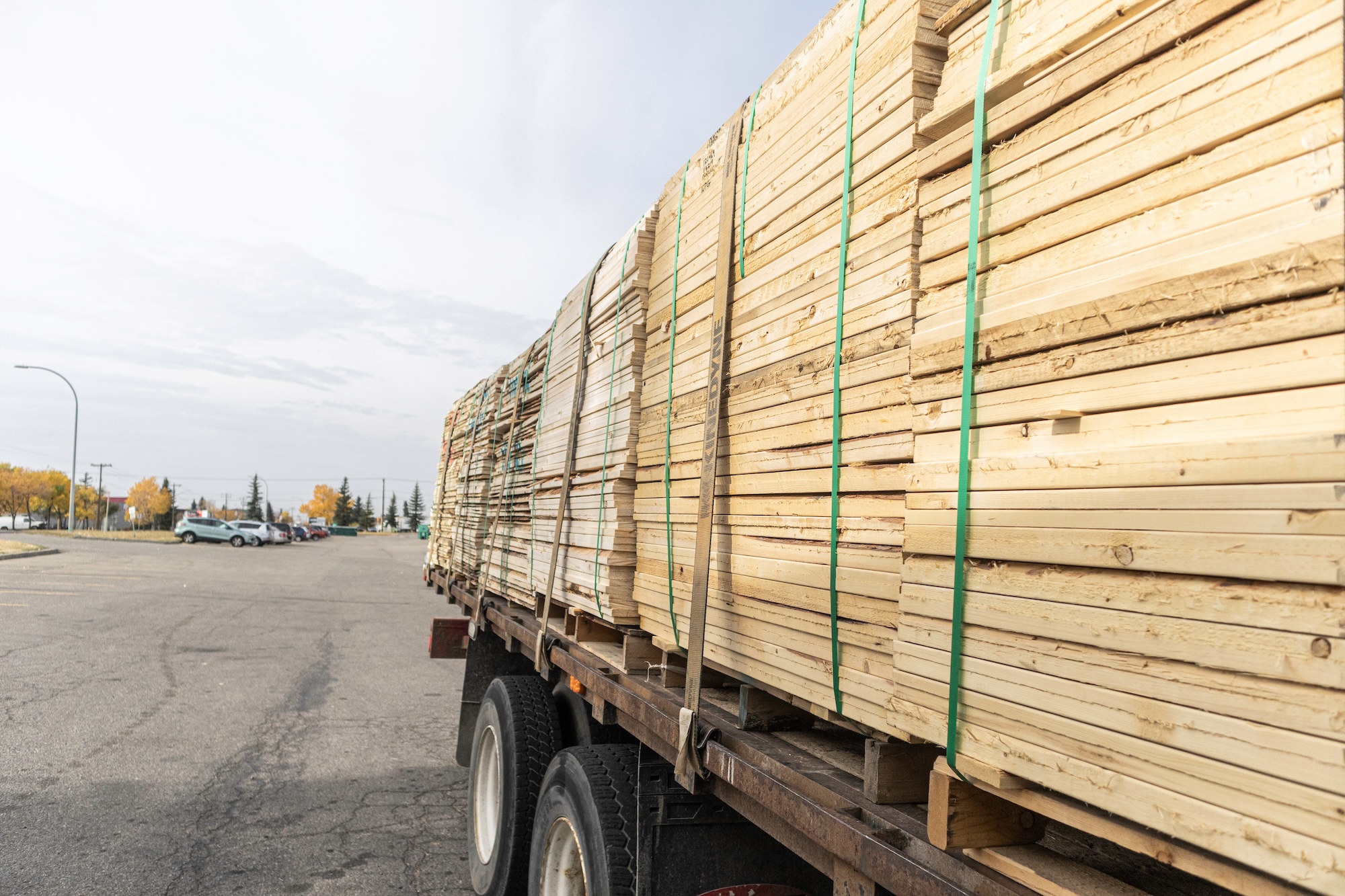
When the Driver is En Route
Builders’ merchants are harnessing location data to provide real-time status updates as the day progresses. This reduces the need for time-consuming phone tag between customers, dispatchers and drivers.
As the driver moves through their route, you can provide a “shrinking ETA window” to customers. This might include:
- A one-hour timeslot first thing in the morning.
- A precise ETA when the driver is fifteen minutes away.
- A final notification as the driver arrives.
- A link to an online portal with map-based tracking and a progress bar.
Advanced customer engagement technology allows you to create workflows based on different scenarios. For example, you might send an additional message if the driver is delayed. Increased transparency turns a negative experience into a moment of stand-out customer service.
Since crews know exactly when goods will arrive, materials aren’t left unattended. That means fewer opportunities for building site theft, vandalism and damage.
As the Delivery Approaches
Automated text messages are useful for one-way information sharing. The next step is empowering customers to share useful information with drivers and dispatchers.
SMS messages can link to a web-based portal with the option to chat with the delivery team. Customers typically share details such as additional access instructions and site-specific details.
Sometimes it’s as simple as “Please wait, the site supervisor will be with you in five minutes.”
The benefits go beyond customer experience: businesses using two-way chat enjoy increased first-time access and faster service times.

During the Delivery
A delivery doesn’t end when the goods come off the truck. By digitizing proof of delivery (POD), you can immediately alert customers when, where and in what condition materials were dropped off.
POD emails often include photos of the products delivered, as well as the condition of the site before and after delivery. This creates a visual record that protects both the supplier and the builder.
With instant POD communications, crews can quickly locate the materials they need. Site managers know exactly what was delivered, reducing the need for credits and re-deliveries.
Parfeniuk explains: “We empower our customers with a mobile workflow so that when the driver delivers, an email goes to the customer. It's a very timely message with proof of what was delivered. And through that process, we help customers retain the 1 to 3% of top-line revenue that historically was given out as courtesy credits. This helps improve profitability.”
After the Delivery
In building supply, the last mile can make or break the customer experience. Late deliveries, partial loads and damaged goods can have a catastrophic effect on customers’ projects, timelines and labor costs.
Timely feedback allows distributors to deal with delivery problems quickly and keep buyers coming back.
To collect feedback quickly, you might be tempted to have drivers survey customers on site. But this method leads to biased responses and increases the administrative burden on drivers.
Customer engagement technology enables merchants to send a survey link as soon as the truck leaves the site. Customers can submit feedback without pressure, while the experience is still top-of-mind.
This approach increases the overall response rate and captures a more balanced picture of delivery performance.
Digitizing the feedback process also enables real-time alerts when a customer submits negative feedback. Service reps can telephone the customer before the complaint escalates – turning an unhappy buyer into a recurring customer.

The Case for Customer Communication
In an increasingly commoditized market, customer experience becomes the differentiator. For mission-critical deliveries, builders will opt for a supplier they view as a safe pair of hands, rather than one that’s two percent cheaper.
By investing in customer engagement, distributors can deliver confidence at scale while driving down logistics costs. Businesses using Descartes Customer Engagement™ benefit from reduced inbound calls, faster service times and a reduction in claims.
Contact us today to get started with customer engagement
Fleet Resource Center
Expand Your Fleet Performance Management Knowledge
Recommended For You


