
Transportation leaders are closing 2025 focused on stability, visibility, and cost discipline. The 9th Annual Descartes Transportation Management Benchmark Survey shows how North American shippers are adapting after years of volatility. Their decisions signal the logistics trends that will shape 2026—from fleet strategy to the growing use of automation and artificial intelligence (AI). Read on to see which developments will define performance in the year ahead and how to prepare for them now.
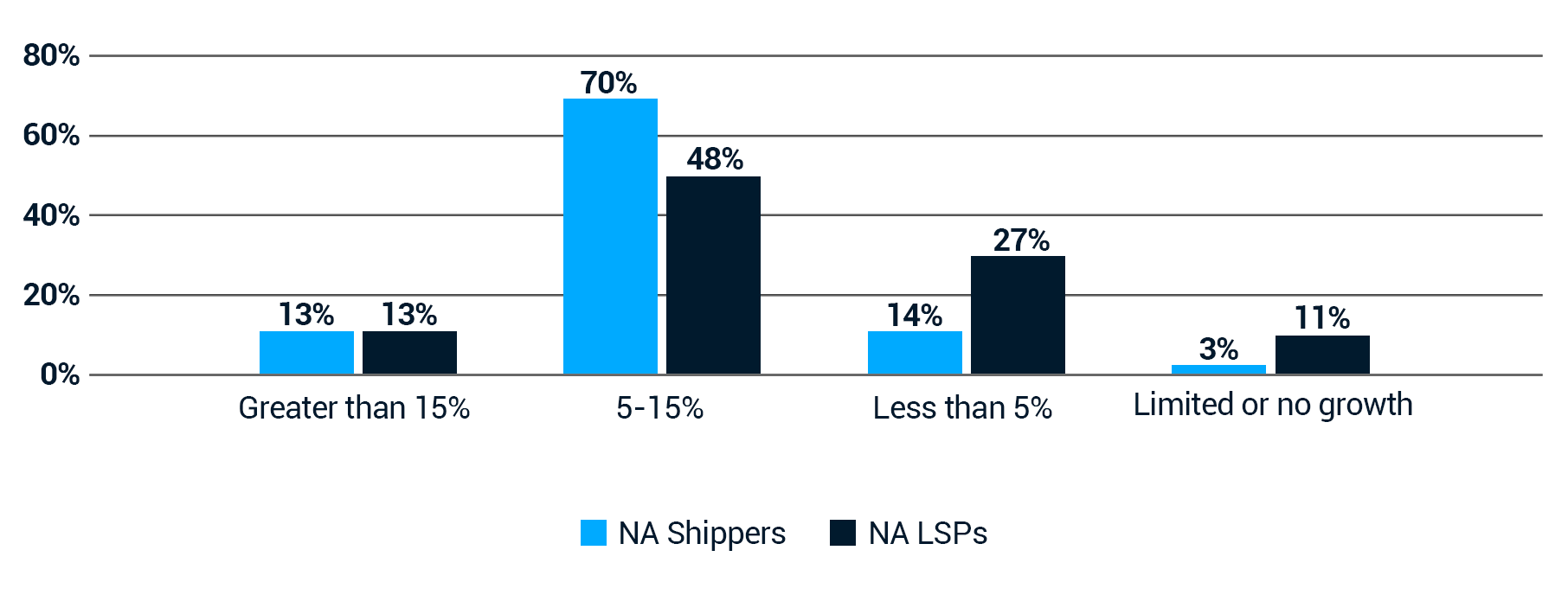
Annual Growth Projections Over the Next 2 Years
1. Growth brings operational pressure
Seventy percent of North American shippers expect 5–15% growth over the next two years, signaling confidence as markets stabilize. Even steady expansion can test transportation and warehouse capacity if scaling lags behind demand. Many shippers planning for growth are also increasing investment in visibility and automation to maintain service quality.
Review how staffing, fleet mix, and automation plans align with potential volume growth heading into 2026.
2. Dedicated capacity is back in focus
Nearly half of North American shippers now use private or dedicated fleets, a higher rate than other regions. Longer hauls, tight service windows, and lessons from recent capacity crunches make fixed assets appealing again. The trend points toward a hybrid model: retain carrier flexibility, but secure dedicated assets for key lanes and service-sensitive freight.
Reassess where dedicated capacity adds stability without overcommitting fixed cost.
3. Cost pressures extend across longer supply chains
Tariffs, fuel, and inflation continue to weigh more heavily on North American shippers than global peers. Teams are using their transportation management systems to model scenarios and identify how surcharges affect total landed cost. The companies that can adjust rates and routing fast will protect margin first.
Pinpoint lanes and partners most sensitive to price shifts, and plan contingency routes before costs peak again.
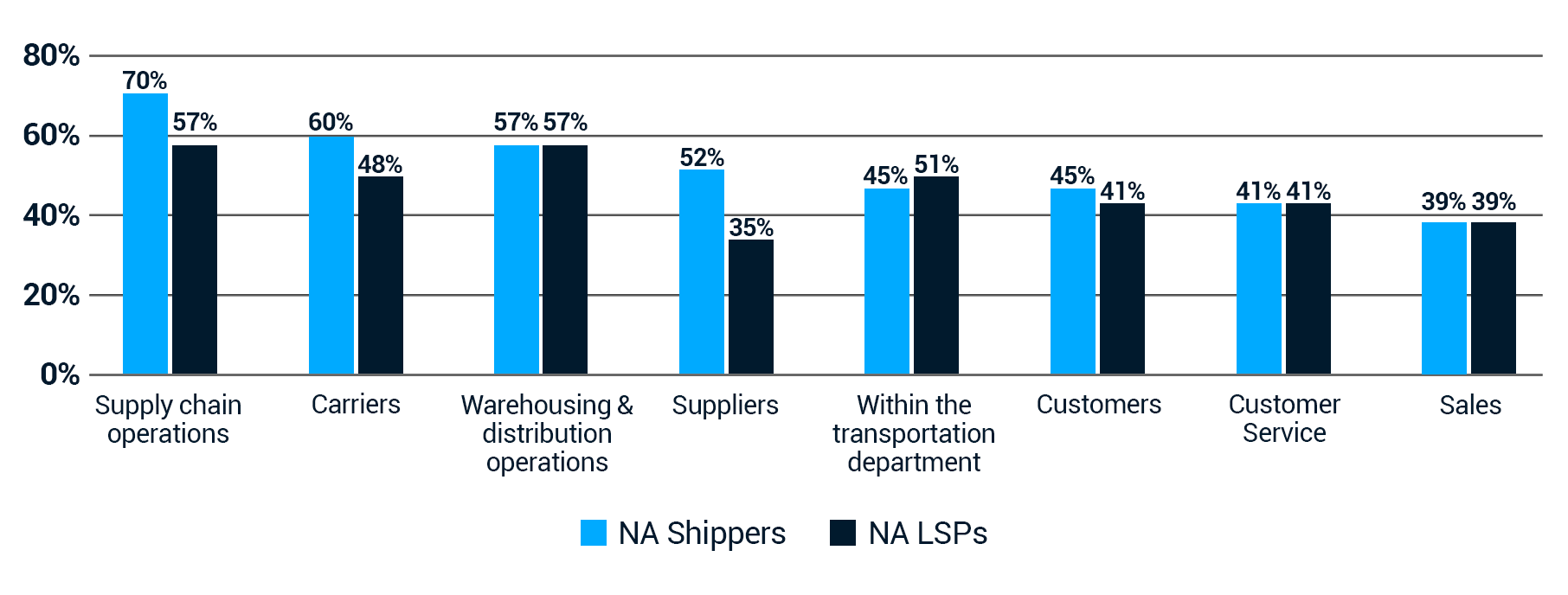
How Transportation Information Is Shared Across Teams
4. Supply chain visibility is a shared resource
Seventy percent of North American shippers now share transportation data with supply chain operations, and more than half extend that visibility to suppliers. The practice enables faster response when disruptions occur. Heading into 2026, visibility is shifting from a reporting function to a collaboration tool.
Expand visibility to partners who can act on it earliest to reduce disruption and improve flow.
5. Analytics tie transportation to business outcomes
More shippers are measuring how transportation affects customer experience as well as cost, recognizing that reliability supports both retention and margin. The most effective teams connect transportation performance to order cycle time and fulfillment targets, treating logistics as a contributor to revenue growth.
Link transportation, service, and fulfillment data to uncover performance patterns that drive business outcomes.
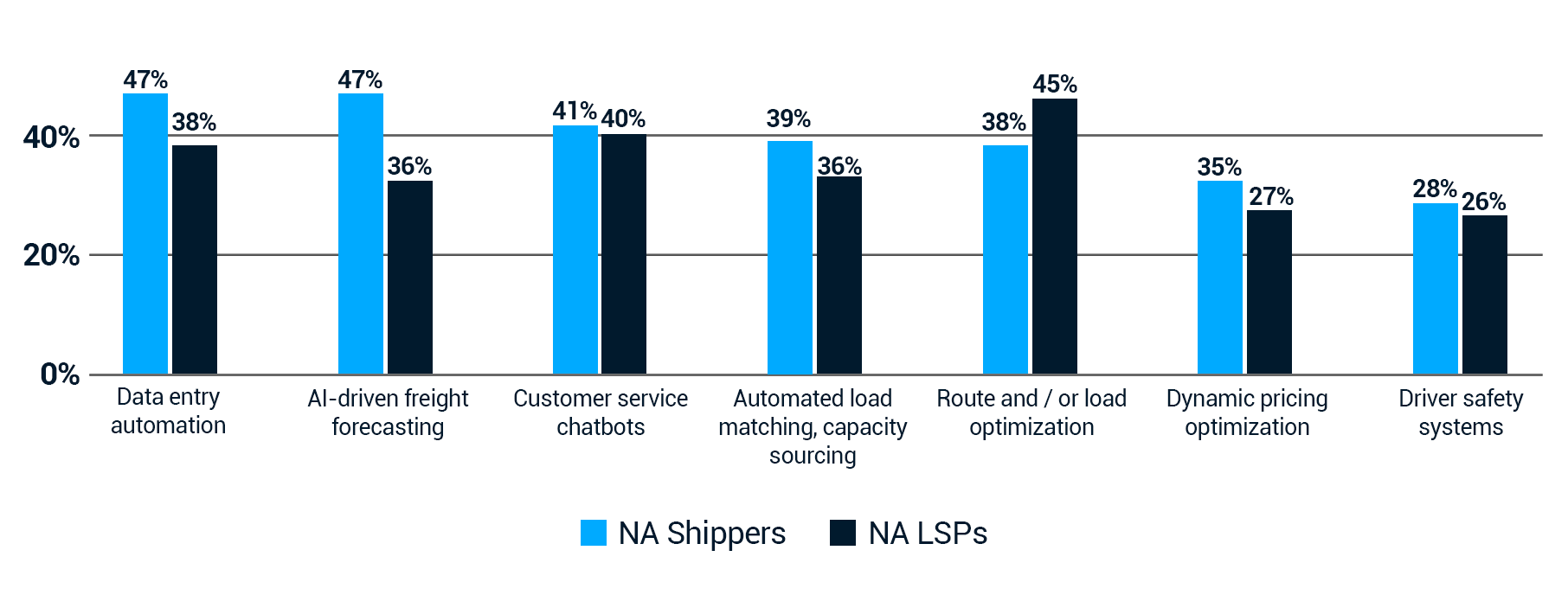
Where Companies are Using Generative AI
6. AI in transportation moves from pilots to process
Forty-seven percent of North American shippers already use AI for freight forecasting or data entry automation, with adoption climbing across more operational areas. The focus is practical—using generative and predictive tools to improve accuracy and speed. As adoption deepens, the question is shifting from where AI fits to how much trust teams place in its output.
Use AI to surface insights that guide transportation decisions, not just to process the data behind them.
7. Supply chain automation targets repetitive, high-impact tasks
Automation is expanding in areas where errors create cost or delay. Rate audits, tendering, appointment scheduling, and dock operations are early candidates. The goal is not to remove people but to reassign labor toward exception management and performance analysis. Automated workflows that connect directly to carriers and suppliers will define the next wave of logistics efficiency.
Treat automation as a precision tool. Start where data quality and process control are strong enough to sustain it.
8. Benchmarking defines the next stage of improvement
The 2025 survey gives transportation teams a sharper view of where progress has slowed and where peers are advancing faster. The value is less in the comparison itself and more in using those gaps to set the next round of goals. Many leaders are folding benchmark data into quarterly planning to ensure the areas that lag receive attention first.
Let benchmark results set the pace for improvement so priorities stay aligned with where the market is moving.
What these logistics trends mean for 2026
Each of these logistics trends shows a sector in transition. North American shippers are using technology to manage complexity, not chase novelty. They are grounding AI in clear use cases, applying automation selectively, and viewing visibility as a shared advantage.
The coming year will reward logistics leaders who align digital investment with operational reality. The companies that act now will enter 2026 with greater resilience across the supply chain.
Explore the 9th Annual Descartes Transportation Management Benchmark Survey to see how your logistics priorities align with the trends shaping 2026.
FEATURED VIDEO
What is Descartes MacroPoint?

INDUSTRY WHITE PAPER
2025 ARC TMS Supplier Spotlight
Descartes named top provider of cloud-based TMS & Fleet Management Solutions in ARC Advisory Group’s global TMS report
SOLUTION HIGHLIGHT
Descartes MyCarrierPortal™️
Descartes MyCarrierPortal is the trusted platform that helps brokers, 3PLs, and shippers streamline carrier onboarding and vetting to prevent fraud, and reduce compliance risk
Recommended For You

Explore the checklist to verify carrier identities & prevent fraud within your carrier network. Ensure compliance, verify identity, and safeguard shipments with our proven carrier checklist.

Check out our webinar with Ken Riddle, Director at the FMCSA, as he shares exclusive insight into how the agency is cracking down on fraud, increasing oversight, and building a more transparent freight industry.
Nationwide Equipment Transportation cut onboarding time, boosted compliance, and stopped freight fraud using Descartes MyCarrierPortal and MacroPoint.