
What is Electronic Proof of Delivery (ePOD)?
Proof of delivery (POD) refers to documentation validating that customers have received their goods. Traditionally, POD has taken the form of a customer signature on a physical document.
However, many delivery organizations have moved to electronic proof of delivery (ePOD) to help automate and speed up the documentation of a delivery.
A mobile application eliminates paperwork by capturing digital proof of delivery - relevant data and photos to verify that the order was handed over. Digital POD can prove that goods were delivered whole or in part, as well as capturing any damage to the goods or to the recipient’s property.
Many organizations have moved to “contactless” proof of delivery. The delivery driver takes time-stamped, geo-stamped photos, without the need for customers to sign a document or screen.
In this Article...
- toc
What are the benefits of electronic proof of delivery?
POD produces a record of a delivery that is typically part of the invoicing process. The proof establishes a commercial record of the delivery process and documents any discrepancies in the delivery.
The goal of digital proof of delivery is to ensure that there is agreement with the customer on what was delivered and the resulting financial settlement.
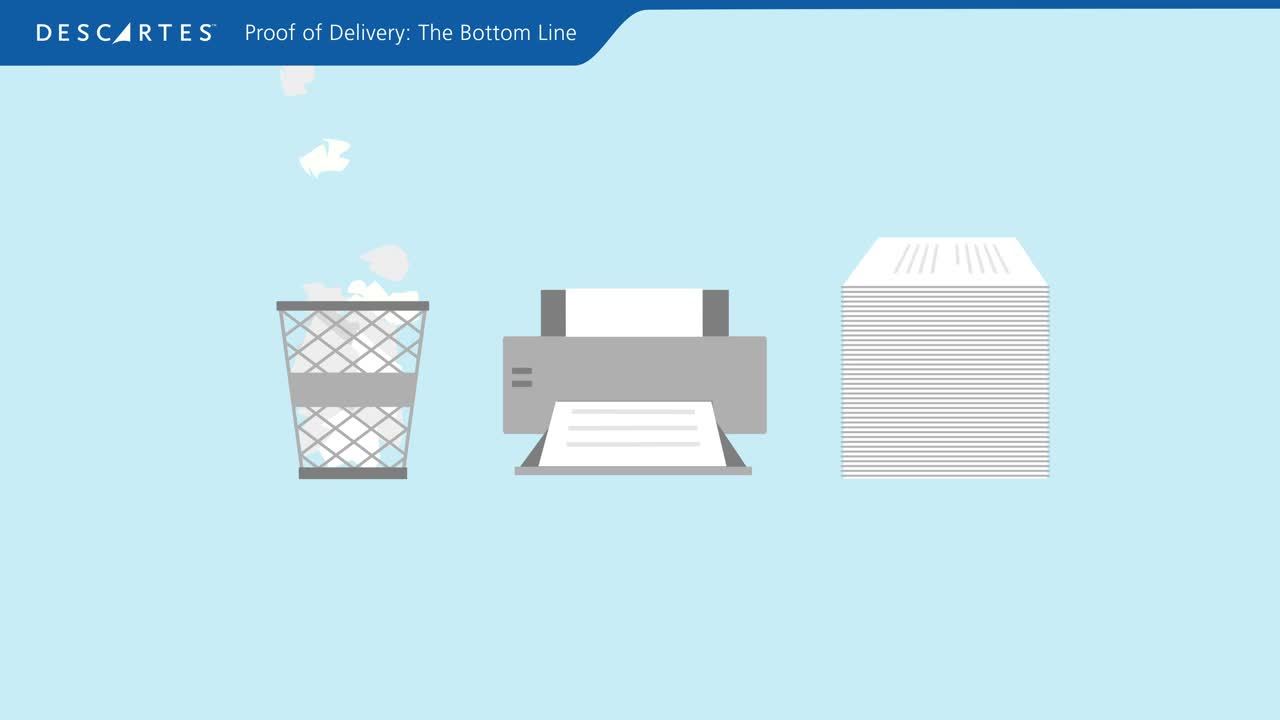
Paper-based documentation can be used for POD, but it is error prone and slows down the invoicing process. Many companies have turned to electronic proof of delivery because it reduces human error and speeds up the billing process.
Key benefits of digital proof of delivery include:
- Reduction in overall costs through eliminating manual documentation.
- Faster billing cycle as delivery data can be used immediately to invoice the customer as opposed to days later.
- Reduction in fraudulent claims for missing or damaged goods or property.
- Contribution to environmental objectives through a reduction in paper-based documentation.
- Support for “contactless” POD capture process which ensures the safety of drivers and customers.
How does electronic proof of delivery help my customers?
Digital proof of delivery helps customers understand what has been delivered, and documents any discrepancies that could result in returns, refunds or re-delivery.
Executed electronically, proof of delivery eliminates documentation errors and better describes discrepancies such as damage.
In complex delivery locations such as building sites, POD lets customers know where goods were left, and who attended the delivery.
Fast and accurate proof of delivery builds trust with customers, improving their overall experience.
What is contactless electronic proof of delivery?
With contactless ePOD, electronic pictures with GPS coordinates are used to document a delivery. With this method, a physical signature is no longer required.
Contactless POD has become the norm due to social distancing requirements as a result of COVID-19.
INDUSTRY WHITE PAPER
Home and Last Mile Delivery Best Practices
This eBook describes how to improve your home delivery and last mile performance. It all begins with a new outlook and vision to make delivery a competitive advantage.
What does ePOD mean?
ePOD stands for electronic proof of delivery. ePOD helps automate and streamline the documentation of a delivery.
By using a mobile application for proof of delivery, businesses can eliminate paperwork. The app is able to capture the relevant data and pictures to verify the delivery of an order whole or in part - as well as any damage.
What are the benefits of electronic proof of delivery?
ePOD helps automate and streamline the documentation of a delivery. ePOD reduces the cost to capture customer delivery data by eliminating manual documentation.
ePOD also reduces the billing cycle as delivery data can be used immediately to invoice the customer as opposed to days later. ePOD helps to create the right invoice eliminating claims and reducing invoicing errors.
ePOD also helps to ensure that the right goods get to the right customer and can reduce unloading time. Another benefit of ePOD is that by eliminating paper-based documentation it is help reduce carbon footprint.
Types of ePOD
ePOD might include elements such as:
- Signature: The customer of driver may need to draw their signature on a mobile device to confirm the delivery.
- Photos: Photos should show the item that has been delivered, with a clear view of the item’s location. With the right mobile application, photos can be time-stamped and geo-stamped to prove when and where they were taken.
- Proof of condition: Proof of condition photos help to verify claims damaged or faulty goods. For bulky goods, the driver might also take “before” and “after” photos of the delivery site to prove that the property has not been damaged.
How does ePOD save me money?
ePOD reduces delivery costs because it eliminates paper-based forms.
Drivers can complete deliveries more quickly and efficiently without the need for manual processes.
Digital data capture reduces the administration costs of dealing with errors, invoice generation and claims management.
Reliable proof of condition reduces fraudulent claims for missing, stolen and damaged goods.
Electronic proof of delivery examples
Richards Building Supply (RBS) invested in route planning and delivery software to help ensure consistent, on-time delivery to its growing customer base.
Paper-based proof of delivery had resulted in illegible details and lost paperwork. RBS now uses digital POD to verify that the right materials were delivered in good condition at the right location.
Drivers can get back on the road quicker to keep delivery promises and increase the number of deliveries per day.
"The new Richards Building Supply proof of delivery is great for our business. It assures us that materials were delivered in a timely fashion and provides reassurance that, when my crew shows up to the job site, all materials are there and ready for them to begin the project. Great addition to an already exceptional customer-service based company."
Eric Shaffer, Archway Restoration
Connect with our team to take the next step towards transforming your delivery process.
Fleet Resource Center
Discover Tutorials, Success Stories, Thought Leadership, and More to
Deepen Your Fleet Performance Management Expertise.
Recommended Reads


