EU Corporate Sustainability Due Diligence Directive (CSDDD)
The Corporate Sustainability Due Diligence Directive (CSDDD) raises awareness of the need to promote responsible practices within companies. Environmental and social issues are becoming more pressing worldwide, and this directive aims to establish a clear regulatory framework to ensure that businesses integrate sustainable practices into their operations and supply chains.
This directive marks a turning point in companies' management of environmental and social impacts. It aims to ensure that businesses take the right steps to identify, prevent, and mitigate the negative effects of their activities on human rights and the environment by imposing strict due diligence standards. With this initiative, the European Union wants to promote a more responsible and sustainable economy while strengthening corporate transparency and accountability.
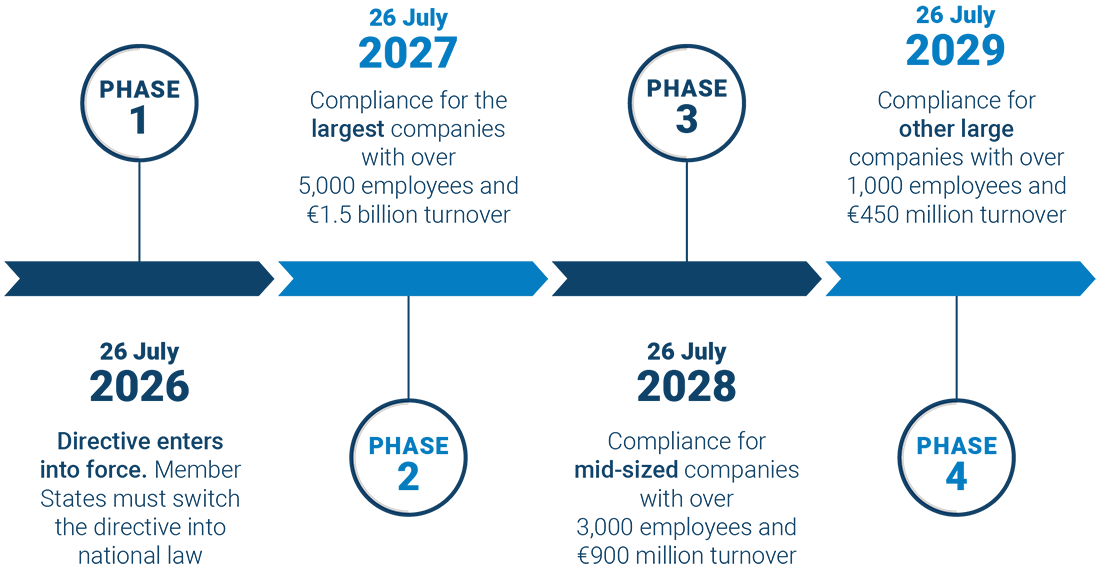
The deadline, although delayed an extra year, is quickly approaching and companies will need to comply with this new regulation by the 26th of July 2027. This article explains this new directive, the companies directly affected by it, the obligations they need to follow, and the deadlines for complying with it.
What is the Effect of the Corporate Sustainability Due Diligence Directive on Companies in the Supply Chain?
The fundamental principles of this directive are based on companies' obligation to conduct a thorough risk assessment regarding their impact on the environment and human rights. The CSDDD covers the entire chain of activities, including upstream and downstream processes.
Companies in the supply chain cannot ignore sustainable practices. To comply with this upcoming legislation, you must actively work to reduce environmental harm, guarantee fair working conditions throughout the supply chain, and ensure your stakeholders and partners comply as well.
While conducting these thorough risk assessments is essential, working closely with your business partners to ensure compliance is equally important. To do so, you need to prepare for potential changes in supply chain operations and provide your partners with the right tools and information to apply them.
The main goal of this directive is to reduce the environmental impact and promote fair working conditions, to give voice to those who are negatively affected, and to provide an opportunity to hold non-compliant businesses accountable.

Which Companies Need to Comply with CSDDD?
This directive primarily targets large and medium-sized companies operating in the European Union (EU), specifically companies with more than 5,000 employees or an annual turnover of more than 1.5 billion euros generated in the European Union. Nonetheless, the CSDDD can also target smaller companies that might be required to comply with specific obligations.
The directive focuses on extractive industries, manufacturing, agriculture, and financial services. These industries are being given more attention due to the higher environmental and social risks they create as businesses. Companies in these industries must be prepared to integrate these policies and practices to meet the CSDDD’s requirements.
Logistic providers play a critical role in the supply chains of high-risk industries. This means they will increasingly be expected to demonstrate transparency, reduce emissions, and ensure ethical labor practices in operations.
However, exceptions might apply to small and medium-sized companies and non-profit organizations depending on their activities and impact.
Eligibility to these exceptions depends on the company’s size, turnover, and nature of business. Although some companies might be exempt from the directive, adopting these sustainable and socially responsible measures is highly encouraged.
4 Steps Towards CSDDD Compliance
Businesses need to adopt due diligence measures tailored to their activities, including assessing and managing environmental, social, and governance risks within their operations, and implement internal policies ensuring compliance with sustainability standards throughout their value chain.
To effectively navigate the requirements of the CSDDD, it’s recommended that supply chain companies follow these 4 steps:
Logistics providers should be ready to share data on emissions and labor practices. This might involve investing in digital tools to track emissions, working conditions, and supplier compliance.
Implement training programs for suppliers, like workshops, so everyone has the right tools. If compliance cannot be guaranteed, these partnerships might need reconsidering to avoid liabilities.
Assess your existing supply chain and compliance processes. Identify measures to enhance visibility and ensure compliance throughout the supply chain.
Contact the appropriate consulting services to verify your compliance and explore alternative solutions to ensure your company effectively meets the CSDDD requirements.
What are the Penalties for Non-Compliance?
The application of CSDDD relies on strict enforcement mechanisms and severe penalties for companies that fail to comply. Non-compliance with environmental and social standards results in financial penalties and operational restrictions.
Regulative authorities will collaborate with Non-Governmental Organizations (NGOs) and local communities, playing a key role in this directive. They will be in charge of monitoring companies and enforcing regulations, making sure all businesses meet their obligations. Furthermore, dedicated channels will be established so stakeholders can report violations, enhancing transparency between companies that work towards a sustainable ecosystem.
What are the Deadlines for Implementing this New Directive?
EU companies need to ensure they are ahead and well-prepared to meet the CSDDD requirements to contribute to a more sustainable and responsible business environment. Here is a table to help you understand what each phase involves and the deadlines to comply:
What’s Next?
The deadline may seem far away. However, you want to start preparing for CSDDD today by conducting risk assessments, establishing internal policies, and engaging with suppliers. Regular communication with suppliers will ensure alignment with the CSDDD’s requirements. Cooperation with stakeholders is as important as training employees and allocating resources for compliance activities.
Natural resources are lacking, and environmental concerns are on the rise, making sustainability an imperative for businesses. Companies that embrace sustainability and integrate it as part of their business model can achieve potential savings, reduce costs, attract investors, and earn consumers’ support.
The Corporate Sustainability Due Diligence Directive represents a pivotal step towards a more responsible and sustainable business landscape. By implementing its principles, you will comply with regulations, drive positive change, and secure long-term success. Descartes is a leader in supply chain solutions that support sustainability efforts for companies in various market segments.
Curious how Descartes can support your CSDDD compliance journey? We help shippers and logistics service providers measure their CO2 emissions and use the data to choose the most efficient and sustainable transportation options.

Transportation management Resource Center
Explore insights and resources to optimize your transportation operations and empower your supply chain

TMS - FAQ
For more details on what a TMS is check out our FAQ here

Transportation Management Solutions
Global Transportation Technology to Strengthen Your Supply Chain