
Speak with an Ecommerce Expert
Please fill out the form below, and one of our experts will reach out to you.
Challenges you can overcome with Descartes
Poor inventory control and visibility
Know what's in stock, where it is, when to order more, and how much to order. Prevent overselling and underselling.
High operational costs
Do more work with fewer people. Reduce labor costs, eliminate human mistakes, and increase efficiency.
Mis-ships and late deliveries
Ensure that every order arrives on time, delivered to the correct address, with the most cost-effective shipping service.
Slow, error-prone order fulfillment
Automate fulfillment processes, guide warehouse workers in accuarate, efficient workflows, and increase throughput.
Inaccurate multichannel listings
Sync product listings and available inventory across sales channels. Automatically update listings everywhere.
Limited ecommerce business growth
Confidently expand your sales channels and handle higher order volume with operational processes built for scale.
Our customers love practical, easy-to-use software

Easy to implement
“I love the practicality of Descartes’ solution and the ease with which you can implement it into direct use with a team of frontline associates. The only thing that provided more ease than the solution was the customer support and service of the team we worked with throughout the process.”

Landon P. on G2
What do ecommerce customers want for delivery options?
Read Descartes’ annual consumer sentiment study to understand what ecommerce customers value and how it affects consumer behavior.

Ecommerce FAQs
Ecommerce leaders can reduce operational costs by using purpose-built software solutions to solve daily challenges while improving efficiency and accuracy. With less reliance on manual labor and specialized knowledge, businesses see cost savings in shipping, warehousing, inventory, purchasing, and reverse logistics.
Examples of how software can help reduce costs:
- Shipping costs - Use multi-carrier shipping software to find lower shipping rates and recieve discounts on shipping. Automate manual workflows to reduce shipping errors, labor costs, and overpaying for shipping labels.
- Warehouse costs - Use a warehouse management system (WMS) to accelerate order fulfillment and avoid labor costs from overtime or hiring more workers. Prevent picking and packing errors and avoid mis-ships.
- Inventory costs - Use an inventory management system (IMS) to maintain appropriate inventory levels, avoid underselling or overselling, reduce shrink, and predict how much stock to order based on historical data and sales forecasts.
- Purchasing costs - Use purchasing management software to maintain accurate records and effective communication with vendors. Avoid expensive, last-minute purchase orders by automating inventory replenishment.
- Reverse logistics costs - Use an all-in-one ecommerce operations platform to receive returned inventory, put it away, and relist it on all sales channels. Reduce the number of returns by decreasing order fulfillment errors.
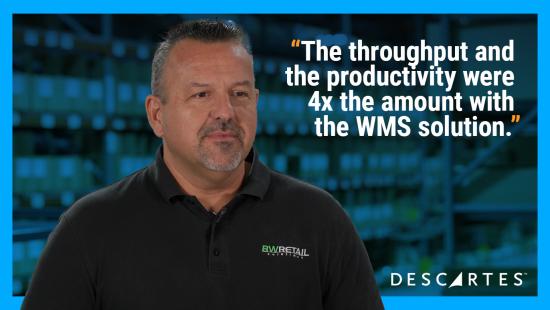
BW Retail Solutions increased warehouse throughput by 4x using Descartes ecommerce operations software. Read the case study
Descartes ecommerce operations software includes integrated inventory management systems (IMS), order management systems (OMS), warehouse management systems (WMS), product information management (PIM) for multichannel listings, multi-carrier shipping software for parcel and less-than-truckload (LTL), and purchase order (PO) management.
Warehouse management system (WMS) software comes in two main pricing models: cloud-based (averaging $100-$500 per user, per month, plus a monthly base fee starting around $2,000) and on-premises (ranging from $2,500-200,000 per facility for a perpetual license). Factors influencing WMS pricing include implementation, the number of users, and the features and capabilities offered.
Descartes offers cloud-based WMS options starting at $600 per month (1-2 users) for small to midsized businesses.
Learn more about WMS cost
While both an inventory management system (IMS) and warehouse management system (WMS) deal with stock in the warehouse, the difference is in the level of detail and control each provides. Many businesses start with an IMS and add a WMS when order volume outpaces fulfillment speed.
What is an IMS?
An inventory management system (IMS) is software that helps you track, control, and optimize your stock levels across all your sales channels and warehouse space. It helps you avoid overselling, underselling, or wasting time manually reconciling inventory across platforms. However, it doesn't provide details about how items move through your warehouse.
What is a WMS?
A warehouse management system (WMS) helps you track, control and optimize the movement of products through your warehouse. When you recieve an order, the WMS shows you each item's location and guides your path to get there. It also helps with putaway and optimizing storage space.
When do I need an IMS?
You need an IMS when inventory control problems, such as overselling and underselling, are preventing the profitable growth of your business. For example, if you're losing track of how many blue shoes you have in stock, selling shoes you don't have, and dealing with upset customers, it's time for an inventory management system.
When do I need a WMS?
It's time for a WMS when you can't keep up with order volume because it takes too long to pick, pack, and ship the correct items. When your warehouse feels chaotic, stressful, and like there's not enough time to fulfill orders without hiring more workers, you are ready for a warehouse management system.
Learn more about inventory management systems
Yes. Descartes offers two inventory management systems (IMS): Descartes Finale Inventory™ and Descartes Sellercloud™.
Descartes Finale Inventory
This IMS is best for multichannel Shopify sellers and scaling small direct-to-consumer (DTC) businesses. With 50+ sales channel integrations, this powerful multichannel ecommerce inventory management system also supports workflows for Fulfilled By Amazon (FBA) and Walmart.
More about Descartes Finale Inventory
Descartes Sellercloud
This all-in-one ecommerce operations platform is best for high-growth Amazon and Walmart sellers, DTC/B2C brands, wholesalers, and third-party logistics (3PL) companies. It includes a robust and highly customizable inventory management system, fully integrated with a warehouse management system (WMS), multichannel listing and product information management (PIM), shipping, accounting, purchasing, and more.
More about Descartes Sellercloud
Descartes ecommerce customers are typically ambitious and focused on business growth. They range from startups to enterprise-level operations and choose integrated software solutions tailored by business size, operational complexity, and fulfillment model.
The types of businesses that use Descartes ecommerce solutions typically fall into the following categories:
- High-growth direct-to-consumer (DTC) brands
- Multichannel ecommerce sellers
- Retailers or distributors with ecommerce divisions
- Marketplace sellers & aggregators
- Small third-party logistics (3PL) providers and manufacturers
Featured content

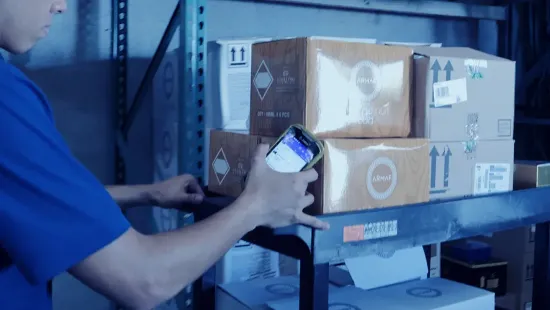
Your business faces unique challenges
See how we can help you move forward